Brain Sciences
Personalized Music-Embedded Sound Therapy Based on Gating Modulation and Neural Decoupling Reduces Tinnitus Severity
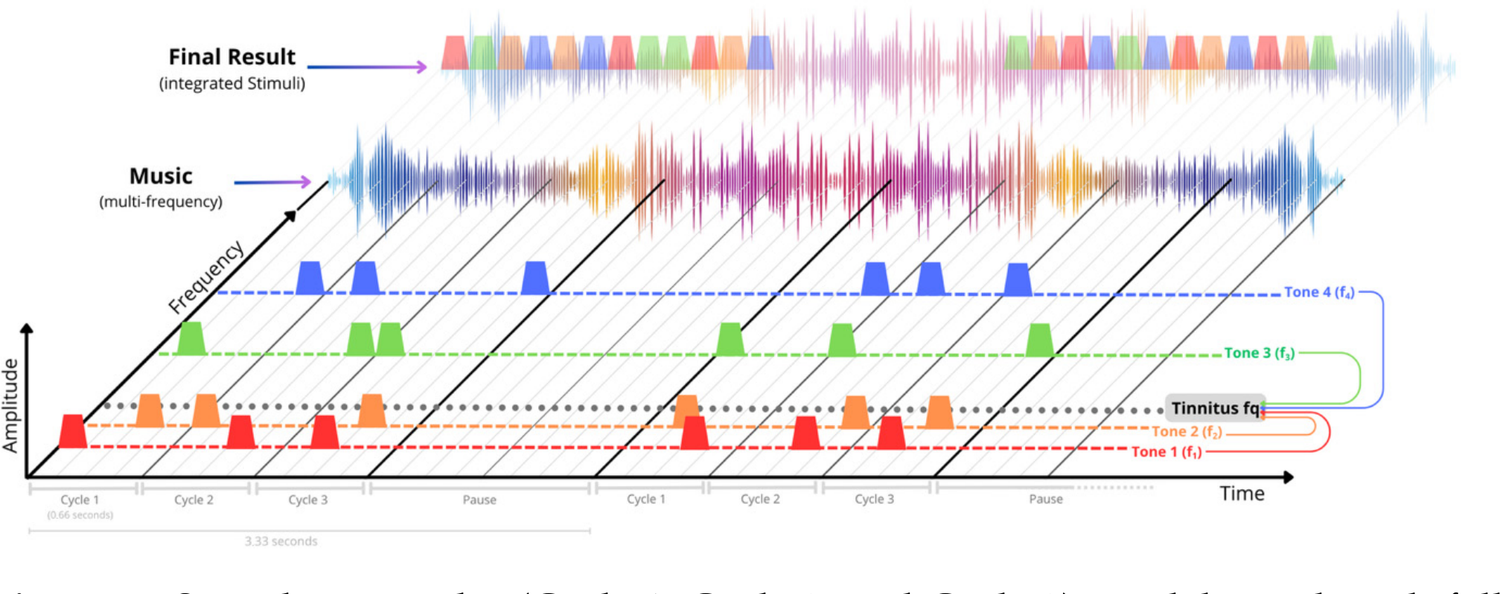
Background: Tinnitus is associated with maladaptive cortical plasticity and aberrant neural synchronization across auditory and non-auditory networks. Desynchronization-based sound therapies (e.g., coordinated reset) often require prolonged daily sessions and specialized formats. We developed a modified protocol embedding therapeutic tones within music (mMIDST) to improve tolerability and engagement. Methods: Prospective, randomized, single-blind pilot trial (Hospital Clínico Universidad de Chile, Jul 2024–Jul 2025). Adults (18–75 y) with chronic non-pulsatile tinnitus received mMIDST or an active low-frequency stimulation (LFS) control, both embedded in identical music tracks, 1 h/day, 5 days/week. Tinnitus severity was assessed with the Tinnitus Handicap Inventory (THI) at baseline and at 1, 2, and 3 months. Results: Twenty-five participants completed the study (15 mMIDST, 10 LFS). The mMIDST group showed significantly greater THI reductions than LFS at two and three months (p < 0.05). Conclusions: Embedding desynchronization-based tonal stimulation within music may represent a promising, well-tolerated, non-invasive approach for chronic tinnitus management.


